Transportation Engineering & Intelligent Transportation Systems
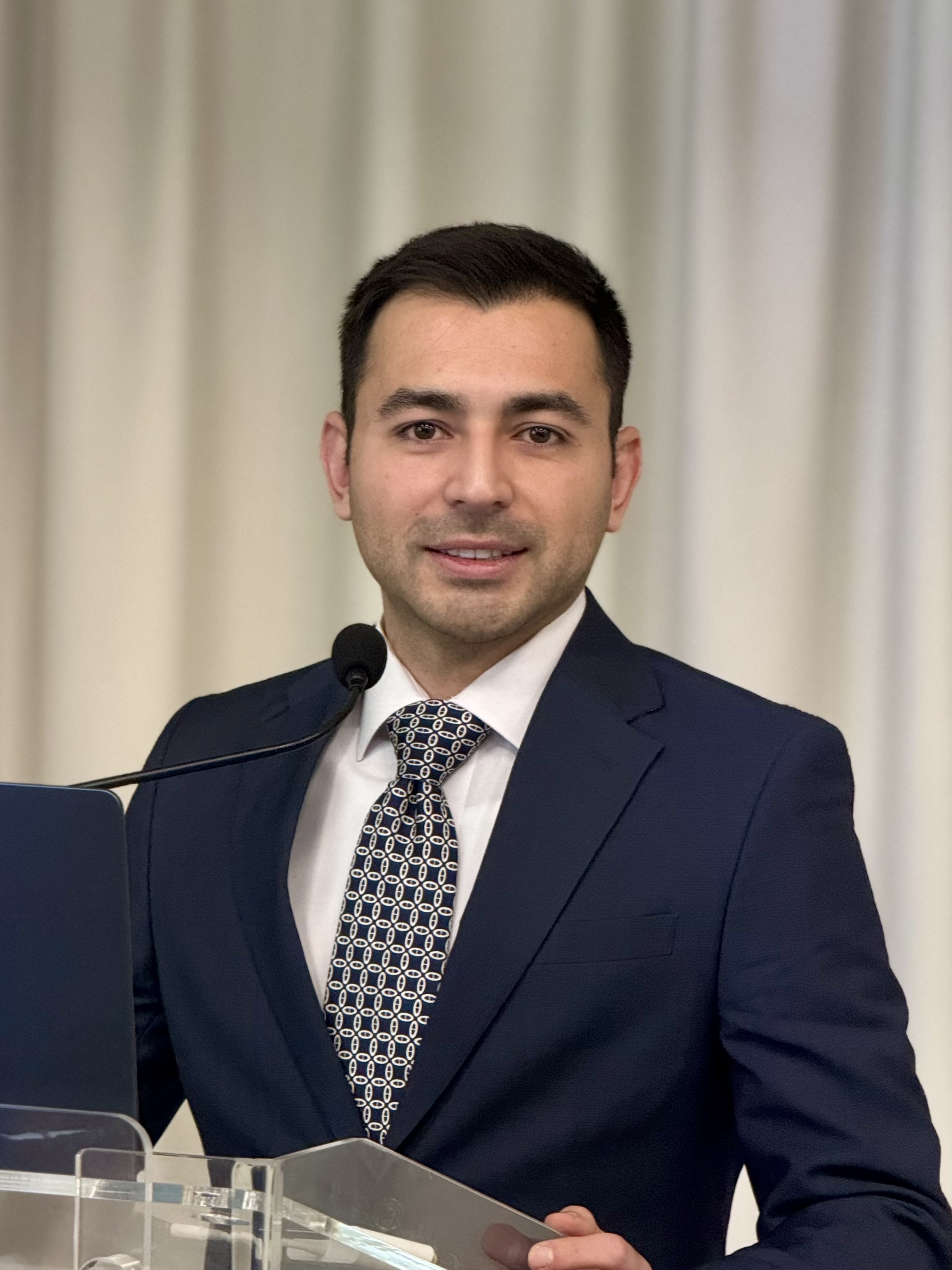
Amir Reza Safari
Artificial Intelligence in Transportation SystemsTraffic Researcher, Naples, Italy
I work on the traffic-state estimation, computer-vision, and digital-twin methods needed to understand how vehicles actually behave on motorways, from computer vision in transportation for vehicle detection, tracking, and re-identification to SUMO/TraCI simulation calibration and AI-based congestion monitoring and decision support.
Currently a Software Operator at CCAMon S.r.l. in Naples, building on research experience as a Digital Twin Research Fellow at Ce.S.M.A., University of Naples Federico II.
Research interests
Traffic state estimation & prediction
Data-driven and physics-informed approaches for estimating and predicting flow, density, and speed under sparse, noisy, or heterogeneous observations.
AI-based traffic monitoring & management
Intelligent methods for motorway and urban traffic monitoring, congestion analysis, and decision support.
Digital twins & traffic simulation
Integrating real-world traffic observations with simulation models such as SUMO/TraCI for calibration, validation, and management applications.
Computer vision for transportation data
Vehicle detection, tracking, re-identification, trajectory extraction, and lane-level speed estimation from roadside and multi-camera traffic video.
Highlights
Premio Jacopetti–Tocchetti 2025–2026 Special Award for Best Engineering Thesis
Rotary Club Napoli and Distretto Rotary 2101 — plus a competitive Ce.S.M.A. Research Scholarship for digital-twin research.
See honors & service →From research to industry
Research experience as a Digital Twin Research Fellow at Ce.S.M.A., University of Naples Federico II, now applied as a Software Operator at CCAMon S.r.l., supporting smart-road deployment across Italy.
Full background & CV →Time to Closest Approach as a Feasibility Descriptor for Highway Merging
A geometric, camera-derived alternative to self-reported gap acceptance, validated against roadside-camera-tracked merges.
Research with Auckland University of Technology
Ongoing collaborative work with AUT spanning multi-label video behaviour recognition and vision-based wildlife monitoring, alongside the Naples-based highway research.
View all publications →